
Design What Outlives You
Everything you refuse to face becomes someone else's inheritance. That is true in a family. It is just as true in a company.
Most people think legacy is something you leave at the end.
It is not. It is happening now, in the ordinary hours, in the things you handle and the things you keep deciding not to. It is being built whether you are paying attention or not, and it does not wait for you to become intentional about it.
I learned that in a therapy room years before I learned it in a business.
Underqualified and willing
I went back to college in my mid-thirties with four children at home.
I had not written a paper in years. I cut hair part-time to pay for it. By every measure that mattered, I was underqualified, and it was still the biggest leap I have ever taken.
During graduate school, my professors told us to go to therapy — not because we were struggling, but because you cannot hand people something you have not done yourself, and whatever you have not faced tends to leak into the room. I went while I still felt fine. It remains the most fortunate timing of my life.
What I found was not a crisis. It was a pattern. Generational things I was carrying without consent and passing down without intent into my marriage, my parenting, and my friendships.
It was overwhelming to see clearly. It was also the first thing I ever refused outright: those patterns would stop with me. They would not proceed through me.
Then the years got harder than the schooling.
My brother died suddenly of heart failure during my junior year. He was forty. I compressed a two-year master's into one after that, because I had just watched how little time is guaranteed, and I wanted to start helping people sooner rather than later.
That fall, my husband's parents were both killed in an accident. Less than a month later, my sister-in-law was placed on life support, and my niece — barely into her twenties — called me to help her decide whether to keep her mother there or let her go. I bought a one-way ticket and went, not as a clinician but as the person who would show up for my brother's kids the way he would have shown up for mine.
I graduated that June. I opened my own practice. Nine months later, Psych Collective was founded, funded in part by the inheritance from my husband's parents, because we could not think of a better way to honor them than putting it back into our community.
Tomorrow is not guaranteed. You will regret what you didn't attempt far more than you will regret staying safe.
I could have used those years as an excuse. Plenty of people would have handed me that permission. I gave them meaning instead.
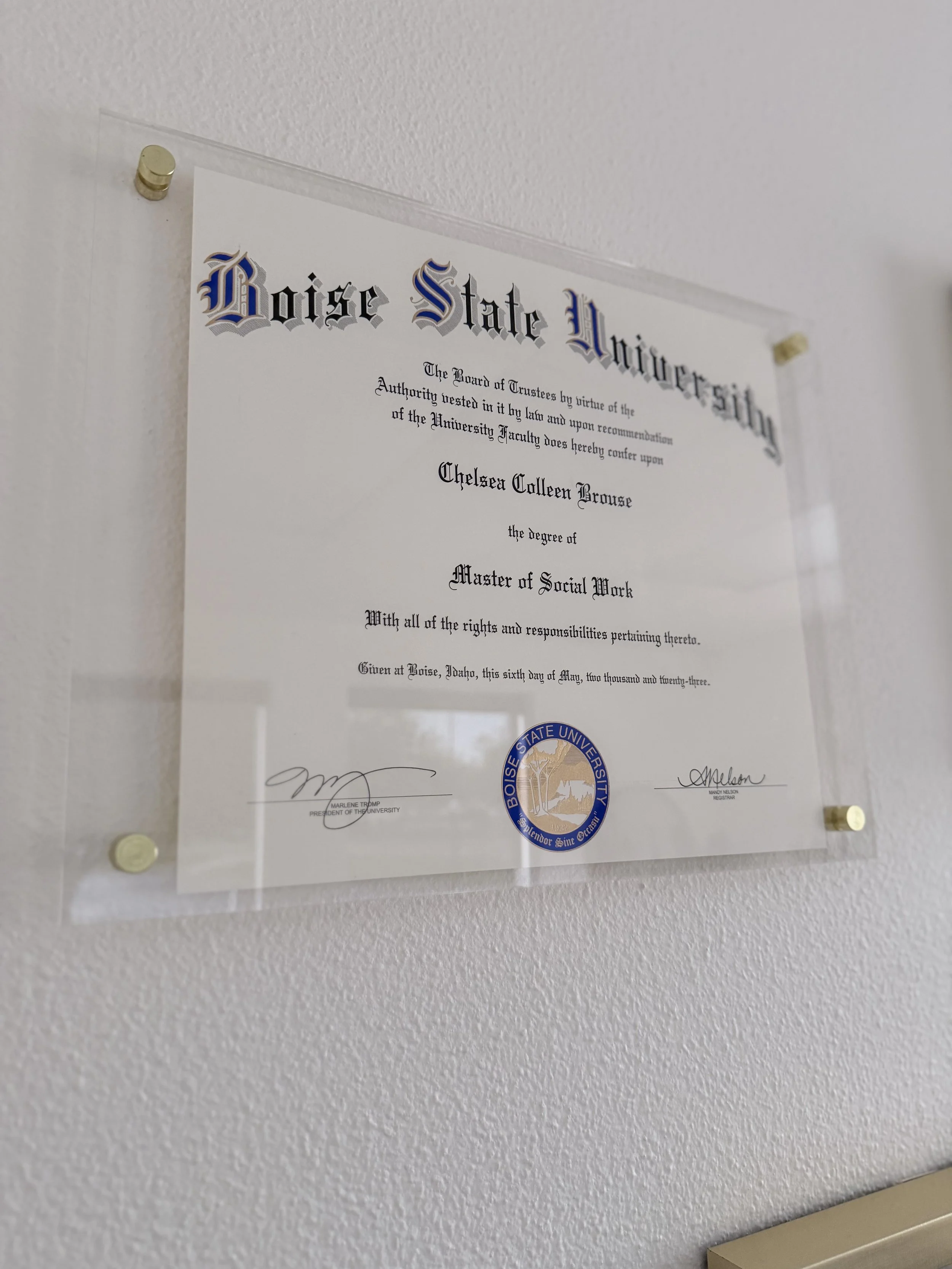
A degree hangs on my wall now. To anyone else it is a piece of paper. To me it is the record of the hardest years of my life — what I survived, what I am capable of, and what I still hope it will turn out to define.
What I was actually building
Psych Collective was never meant to be a practice. I wanted a beautiful space—somewhere a client could walk in without shame and be proud to say they were part of it. Somewhere clinicians were proud of where they worked. A community supported well rather than adequately.
The mission in a sentence: people come to us and leave more themselves than when they arrived.
And then it does not stop with them. It moves into their marriages, their parenting, their children's ordinary Tuesdays.
I was building an inheritance.
What you avoid and never face does not disappear. Everyone around you inherits it.
This is the truest thing I know, and it is why I do this work. The conversation you will not have. The standard you will not enforce. The pattern you keep declining to look at. None of it stays with you — your children absorb it, your team learns to work around it, your clients feel it in the room without being able to name it.
You are always handing something down. The only question is whether you chose it.
I knew what I wanted to hand down. What I didn't have was a roadmap for building something that could carry it without me.
The years I would not repeat.
Before the part of the story that sounds impressive, there was a long stretch that did not.
I was the escalation point for everything. I answered things that didn't need answering because it was faster than explaining. I held relationships that should have belonged to the company. I called it dedication, and my nervous system called it survival, and the two looked identical from the outside.
The business I built to help people heal was quietly costing me the thing I had gone to school to protect.
That is the part most owners are living in right now. So I will not pretend I skipped it.
Maui
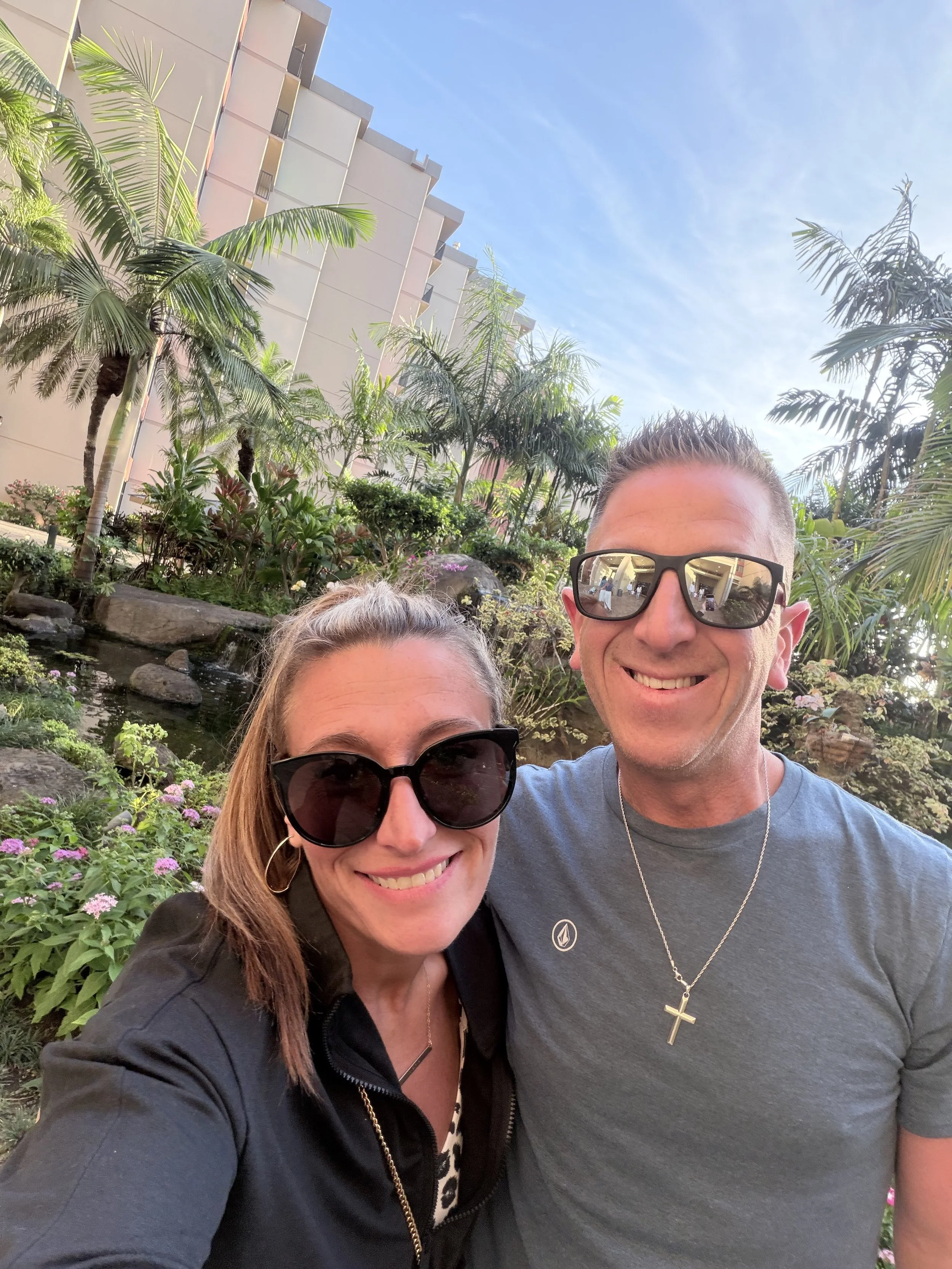
This past March my husband and I went to Maui for our anniversary. Five days. Halfway through, I extended mine to ten.
On day five I called the office. Five minutes. How is everyone? How did the week go?
That was all my company needed from me in ten days.
I want to tell you it felt like triumph. What it actually felt like was disorientation. I kept waiting for the call that would pull me back — the problem only I could solve, the small crisis that would confirm I was still the load-bearing wall.
It never came. The standards held. The decisions got made. The culture showed up in rooms I wasn't in.
It had taken two years. In July I took two weeks in Europe with my family, and that trip exists because of what March proved.
The practice now runs on a leadership team. Handing them the torch was not generous — it was the only way the thing I built could outlast me. And it required grieving how much I had liked being needed.
Some companies are held. Some companies hold.
Every company I have owned, advised, or scored sits somewhere on one axis, and it has almost nothing to do with revenue.
A company that is held works because someone applies continuous force. Standards hold because they are watched. Decisions get made because they are escalated. Culture appears because the owner walked in. Take that person out, and it does not fall — it softens, quietly, in a hundred small places, over about ninety days.
A company that holds is different. The standard survives a hard week. The decisions have owners when you are unreachable. The behavior persists without the person who modeled it.
Nearly every owner I meet believes they are building the second thing. Measured honestly, most have built the first.
The question was never whether your company works. It is whether it works without you.
Outliving you is not a someday question.
It is measurable right now, at four scales.
It outlives a week. You take ten days. What is standing when you return — not the revenue, the standards. This is the smallest test, and most companies fail it.
It outlives a role. Your best person resigns. If the knowledge leaves with them, every departure is an amputation. In a designed company, it is a hiring problem.
It outlives an owner. You step back, get sick, take a season for your family, or sell. The company keeps being the company. This is the version a buyer prices, and the version that turns staying into a choice instead of a sentence.
It outlives you. Someone who never met you upholds your standard, in a conversation you will never hear about. A client heals, and their children grow up around that healing instead of around what went unaddressed.
You are already designing it.
Nobody sets out to build a company that cannot run without them. It is not an accident either.
Whoever can fills every gap. In a small company, that is you. You take the escalation because you can resolve it in four minutes, and explaining it would take forty. You keep the pricing exception because your judgment genuinely is better. You hold the relationship because they asked for you by name.
Each of those choices is correct on the day you make it. Stack them for five years, and they are an architecture — one you never chose, and absolutely built.
Default is a design. It is just a design nobody reviewed.
It begins in your body, not on your calendar.
After Maui, owners in my community started finding me. They asked for stress management. Communication skills. How to delegate, build systems, and hire people who stay.
Every request was real. Not one of them was the problem.
My training is in social work, at the undergraduate and graduate levels. It gave me more than therapy applied to business. It was an understanding of how human beings respond to systems and to one another — what happens to a person inside a structure that was never made clear, what a group does when no one has been given authority, how distress moves through a team until it finds the softest place to land.
That was the foundation Psych Collective was built on, years before I had words for it.
That is also why this work is not summed up in coaching. Everything reverts to the leader's nervous system.
Delegation fails because some part of you needs to be needed. The standard erodes because holding it requires a conflict you cannot yet tolerate. The infrastructure never gets built because building it means sitting in the quiet that arrives when the escalations stop — and for most founders, that quiet is harder than the chaos was.
So we start with your mind, your beliefs, and your capacity to sit in discomfort. Not as a warm-up. As the prerequisite. You cannot think architecturally from inside a threat response: design asks for a long horizon and a tolerance for ambiguity, and an activated nervous system is built for the opposite — immediate, decisive, visible.
What I watch happen next is consistent. The ground gets steadier under you. You stop leading against your own values and start leading from them. And then the business changes for good, not for a quarter.
Psych Collective did not become able to outlive me when I wrote better procedures. It became able to outlive me when I did my own work first.
The order is the method.
Assess. Identify. Consult. I do not skip a step, no matter how much an owner wants to start with solutions. You cannot redesign what you haven't located.
And I read a company in five layers, from the inside out.
Internal — your own patterns under pressure, and what you believe about being needed.
Relational — whether clarity between people was built, or assumed.
Structural — the language of the company, and how growth is actually governed.
Accountable — what your team believes about its own capability, and whether the infrastructure runs.
Sustained — whether any of it holds without intervention.
Pressure does not test those evenly. It finds the layer that was never designed and puts its full weight there. Which means your worst quarter was not a character failure — it was the most accurate audit you have ever been handed. Almost nobody reads it that way.
I have since scored this outside my own walls: a pediatric direct-care practice, a behavioral health organization. Different industries, same five layers, same finding — the bottleneck sat with the leader before it ever sat in the operations.
Ninety days
One question, and it is harder than it sounds.
If you disappeared for ninety days with no contact — what breaks first?
Be specific. And resist naming a person. Whatever you just named is not your weakest employee. It is your weakest layer, and it is the first thing worth designing on purpose.
Then one more, and this is the one I would actually sit with:
What are you currently handing down that you did not choose?
If you want a number instead of a feeling, the Pressure Snapshot is seven questions and about four minutes.
I got the order wrong for years before I got it right. Everything I teach now is the version of this work I wish someone had handed me at the beginning.
Design what outlives you. Not because you are leaving.
Because anything that still requires you is not finished.
BRING THIS TO YOUR ROOM
If this is the conversation your organization needs to have out loud, I deliver it as a keynote, a masterclass, or a working session. Every format includes a live scored moment — your people leave with a number, not notes.
Chelsea Brouse, LMSW — Chelsea Colleen Co. | Design what outlives you.
